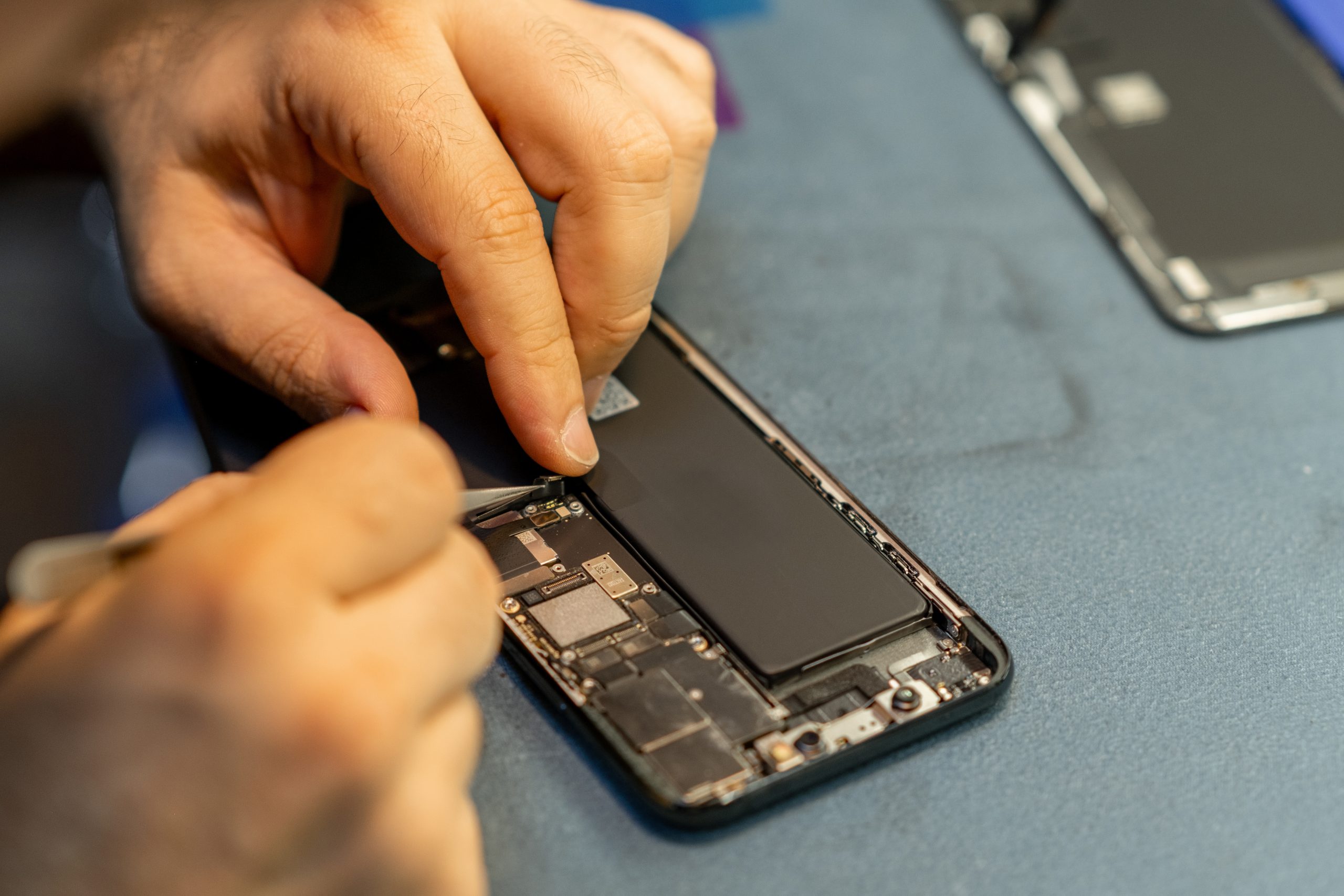
Consumers increasingly want to repair their products rather than replacing them, with EY finding that 67% of consumers wanted this in 2023. This has been driven by increases in the cost of living, a perception of products not lasting as long as they used to, and an increase in the number of products we use. The market has reacted to this, giving rise to companies founded with the specific aim of their products being reparable, such as Fairphone, companies like IKEA making spare parts available, and electricals refurbishing platforms like Back Market.
This circumstantial ability to repair is now being expanded in the EU to a “right to repair” with the EU Right to Repair Directive entering into the national law of all EU countries from 31 July 2026. This is intended to extend product lifetimes and reduce waste as part of the EU’s broader circular economy objectives.
For products sold to everyday consumers and subject to the new EU requirements on repairability, including fridges, smartphones and data storage products, manufacturers or their representatives in the EU will be required to repair goods on request unless repair is impossible. Repairs must also be carried out within a reasonable time and at a reasonable price. Additionally, manufacturers must clearly inform consumers about repair services and make spare parts available under fair conditions. Together, these measures are intended to incentivise repairing rather than replacing, which aims to reduce waste and support sustainable consumption.
The Directive outlines that manufacturers will not be able to rely on contractual clauses, hardware, or software techniques to obstruct repair unless the restriction is justified by legitimate and objective factors. Intellectual property (IP) protection is identified as one example of such a justification. However, the Directive does not define the scope of that exception, leaving national courts to determine where the legitimate exercise of IP rights ends and an unjustified restriction on repair begins. With the arrival of the implementation deadline, attention is focusing on how the Directive will be interpreted differently across the EU.
While the Directive has clear sustainability and consumer benefits, and especially with IP as a legitimate reason for not permitting repair, this raises IP opportunities and potential challenges for businesses. Further complexity is added by the recently reformed EU Registered Design statute, which implements a carve-out from registered design protection for components of complex products when marked appropriately. This carve-out is provided specifically to enhance the ability to repair such products, with spare parts long having been a large number of registered design filings.
While some of the possible IP challenges raised by the Directive are discussed in our earlier article on the right to repair and IP rights, there will be businesses that take advantage of the new right to repair. For example, this gives the opportunity to focus on new processes for replacing components, techniques for configuring and constructing products to allow repair or replacement of components, or enhanced modularity.
These opportunities are available to all types of businesses. They could lend themselves especially well to impact and climate-focused businesses, since such companies already approach a situation with an eye for how to take conventional products and systems and rebuild them more efficiently or cost-effectively. Further, the implementation of this right to repair builds a market for impact and climate-focused businesses, helping drive investment towards such companies when a line is drawn from a company’s products and services to the regulatory framework.
GJE is experienced at supporting companies in the EU and UK in protecting their IP and providing due diligence reports for prospective investors. If you would like to discuss your business’s IP needs, please contact your usual GJE attorney, or email gje@gje.com.
Related resources
The right to repair and intellectual property rights in the EU and UK
The right to repair aims to make it easier for consumers and independent engineers to fix products without...
Patent Law & Practice at a Glance – July 2026
Read our July 2026 edition of patent law and practice which includes updates from the UK, the EPO...
EU designs: Phase 2 reforms launched for the digital age
From today (1 July) the second phase of reform of EU designs comes into effect.