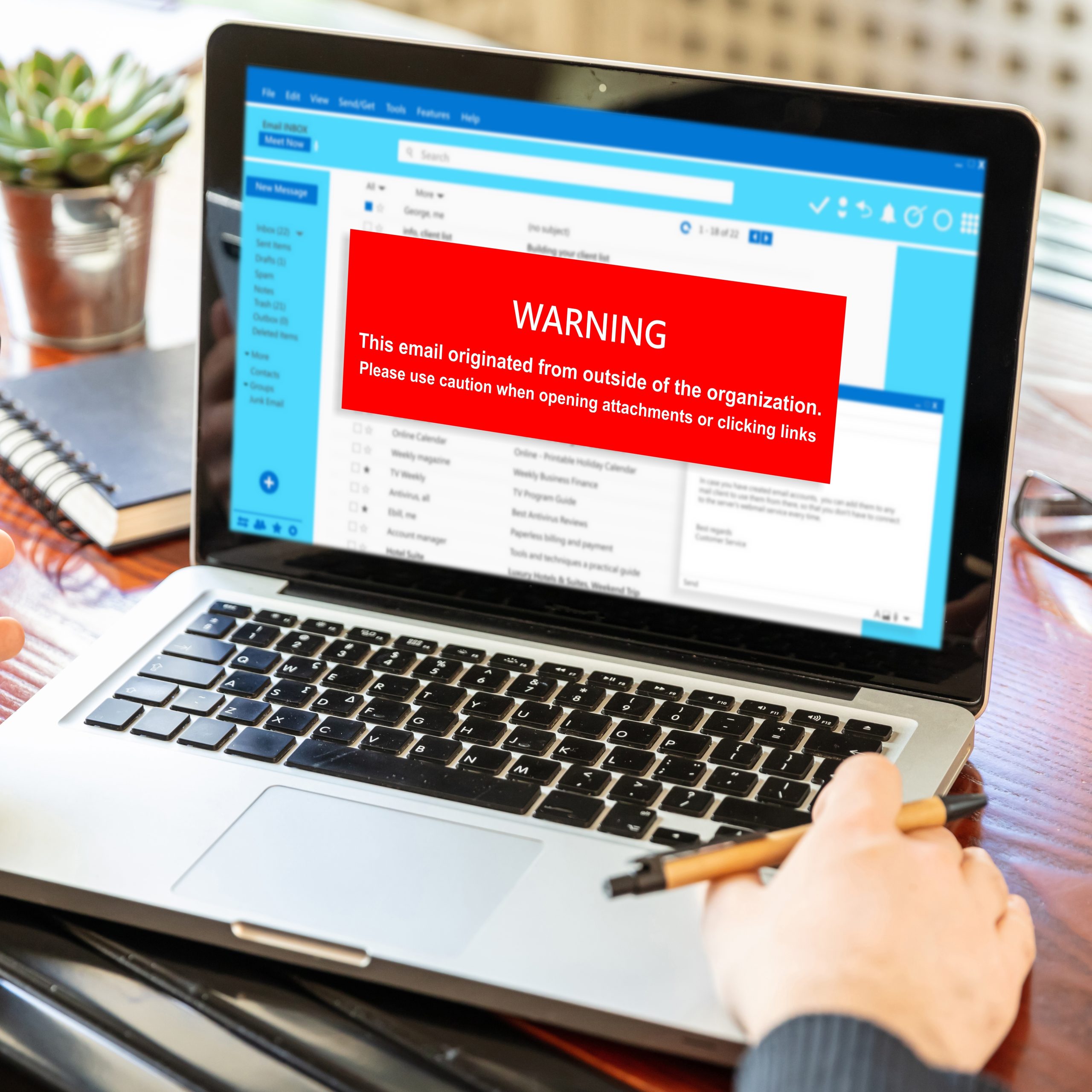
Online scams are unfortunately now notoriously abundant and in recent months, we have seen a noticeable increase in two particular types of scam affecting trade mark owners:
- Phishing emails purporting to come from solicitors or intellectual property professionals, warning of an alleged conflicting trade mark application; and
- Misleading invoices and renewal notices, inviting payment for unnecessary services or private trade mark registers.
Whilst these communications are often sophisticated and can appear convincing, a closer look usually reveals that they are designed to generate fees through fear, urgency or confusion rather than providing any genuine legal service.
Trade mark “conflict” emails
You receive an email purporting to come from a Solicitors Regulation Authority (SRA) solicitor, claiming that another party is about to file a trade mark application for a name similar or identical to your brand. You have been identified as a business using the name and are therefore being given a final opportunity to secure rights before a competing applicant proceeds. These messages typically contain alarming statements about:
- Immediate loss of brand rights
- Legal proceedings for trade mark infringement
- Forced re-branding
- Loss of websites, domain names and social media accounts
- Significant legal costs
The emails are invariably presented as urgent and often suggest that a response is required within a very short timeframe. The problem is that many of the legal assertions made in these emails are misleading or simply incorrect. In the UK, trade mark rights are not determined solely by who files first. Trade mark rights can also be acquired through use of a mark. Registered rights holders will usually receive official notifications through the UK Intellectual Property Office (UKIPO) when potentially conflicting applications are filed. As such, unsolicited emails demanding immediate action should always be treated with caution.
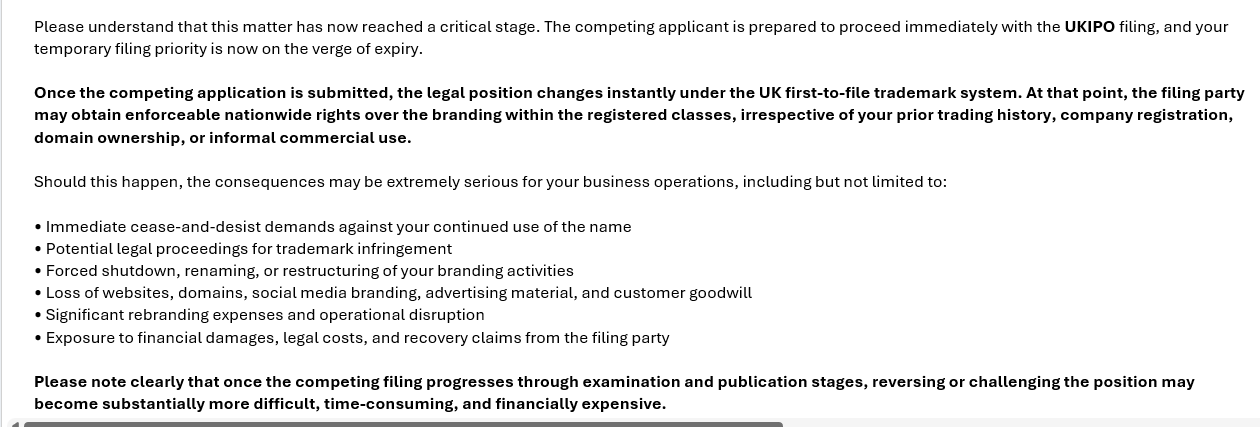
Below is an example of a scam email. While it appears professional and uses urgent legal language, it contains several misleading statements designed to pressure the recipient into acting quickly.
Misleading invoices and renewal notices
The second category of scam is much older but remains remarkably persistent.
Details of trade mark applications and registrations in the UK are on the public record. Unfortunately, unscrupulous organisations routinely monitor trade mark registers and use publicly available information to identify recent applicants and registered owners. They then send official looking invoices or renewal notices requesting payment for services that the brand owner neither needs nor requested.
These invoices commonly relate to:
- Entry of a trade mark on a private register
- Trade mark monitoring services
- Recordal services with no legal effect
- Renewal services offered at heavily inflated rates
Rather than claiming to be the official intellectual property office, the sender may state somewhere in the small print that payment relates to inclusion in a private database or register. However, what is missing, is the crucial point that such registers have no legal significance.
As a result, businesses may pay substantial sums believing they are maintaining their trade mark rights when in reality they are purchasing a service of no practical value.
As is the case in relation to other online and banking scams, the success of these schemes lies in their credibility. Information including the trade mark name, number and owner will be sourced from publicly available trade mark registers. Because the communication contains genuine information, recipients may assume it is legitimate. The use of legal terminology, professional looking branding, and references to trade mark legislation can add a further layer of credibility.
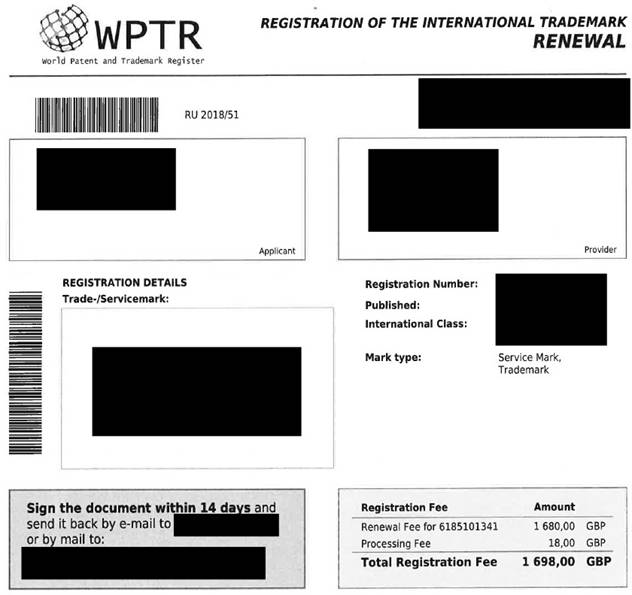
Below is an example of a misleading trade mark communication with personal information redacted. This letter, from the “World Patent and Trademark Register” uses genuine trade mark information and refers to a renewal fee to be paid within 14 days.
Warning signs
Businesses should be cautious if they receive communications that:
- Arrive unexpectedly
- Create a sense of urgency
- Threaten immediate legal consequences
- Request payment to unfamiliar organisations
- Offer inclusion in a register or database
- Claim that rights will be lost unless action is taken immediately
- Come from an organisation with which the business has no existing relationship
- Include links or mention websites or postal addresses that do not stand up to scrutiny
As a general rule, if you have instructed a trade mark attorney to manage your portfolio, official communications will be sent by them. If you receive a suspicious email, invoice or renewal notice, contact your trade mark attorney for advice.
UKIPO and CITMA warnings
The UKIPO and the Chartered Institute of Trade Mark Attorneys (CITMA) continue to warn trade mark owners about misleading invoices and publish guidance and examples of suspicious communications. Concerns have been raised about the increasing sophistication of these approaches and trade mark owners are encouraged to remain vigilant when processing invoices and renewal notices. The UKIPO regularly updates its guidance and publishes examples of organisations known to have issued unsolicited trade mark related correspondence. The examples of misleading or outright scam invoices cited are surprisingly convincing to the untrained eye.
At GJE, we regularly receive enquiries from clients about suspicious invoices, purported renewal demands and emails alleging competing trade mark filings. In the vast majority of cases, these communications can safely be ignored but it is always better to check before acting. If you receive correspondence relating to your trade marks and are unsure whether it is genuine, please contact your usual GJE attorney or email gje@gje.com.
Related resources

Your brand is an asset
This article outlines the essential trade mark checklist every growing business should follow for long-term commercial growth.
Trade Mark Law & Practice at a Glance – May 2025
UKIPO update Series marks to be abolished As a result of the second transformation consultation by the UKIPO,...

UKIPO fee rises from 1 April 2026
The UKIPO’s official fees have increased from today, by around 25% and further guidance has now been provided...