The second phase of the EU design reform took effect on 1 July 2026 and introduced significant practical changes to EU design filing and examination. One of the most significant changes is that applicants can now represent a design using animated representations (i.e. an MP4 video) or dynamic representations (i.e. a three-dimensional OBJ or STL file), alongside the established option of static JPEG images. These new formats are intended to allow applicants to show animated features, transitions and the overall appearance of three-dimensional products more effectively.
Our designs team has analysed data from filings made since the changes came into effect. These shed lights on how frequently the new representation types have been used, the industries adopting them and the practical issues beginning to emerge.
Overall use of representation types
As of the time of writing, the EUIPO has published 24,922 EU designs that had been filed on or after 1 July 2026. Of these:
- 59 used an animated representation (0.24%);
- 33 used a dynamic representation (0.13%); and
- 24,830 used static representations (99.63%).
The figures show that static images remain overwhelmingly dominant. Video and 3D files together account for only around 0.4% of the published designs, suggesting that applicants are sticking to the tried and tested option.
The animated and dynamic designs were filed by a total of 37 different applicants, and it is notable that these were almost exclusively European applicants. One factor influencing the lack of international uptake may be that other design offices do not accept video or dynamic representations. As a result, an applicant cannot use an EU design filed in one of these formats as the basis for a priority claim in another jurisdiction, or claim priority for an EU video or dynamic design from an earlier application filed elsewhere. Their use therefore requires a dedicated EU-only filing strategy, which is likely to be of greater interest to European companies.
Video representation use
Within video designs, the distribution of filings is perhaps unsurprising, with class 14-04 (graphical user interfaces and icons) accounting for 46 of the 59 identified video designs. They depict interfaces for mobile games and other software, and animated logos.
More interesting however, is the extent to which applicants from other industries have made use of video representations. Beyond class 14-04, filings were identified in class 26-05 (lamps), class 28-06 (hair apparatus), class 25-02 (building facades), and class 02-02 (garments). These designs each use the video representation to depict aspects of movement of the design that would have been difficult to represent with static representations.
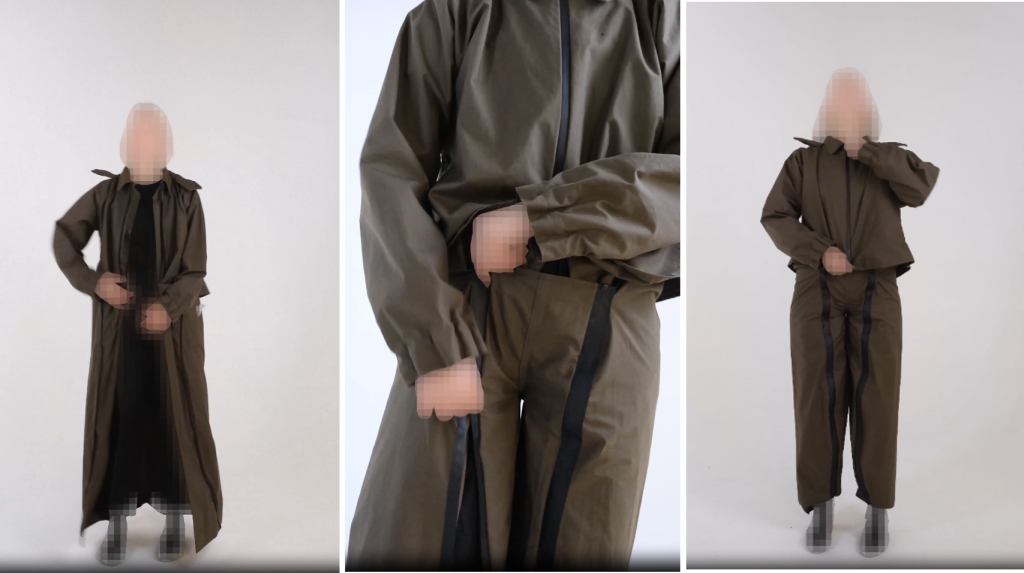
The design filed in class 02-02 (garments) is a good example of this. EU Design 015146984-0001 depicts a person wearing a raincoat who then uses a series of zips to transform the raincoat into a jumpsuit, as depicted below.
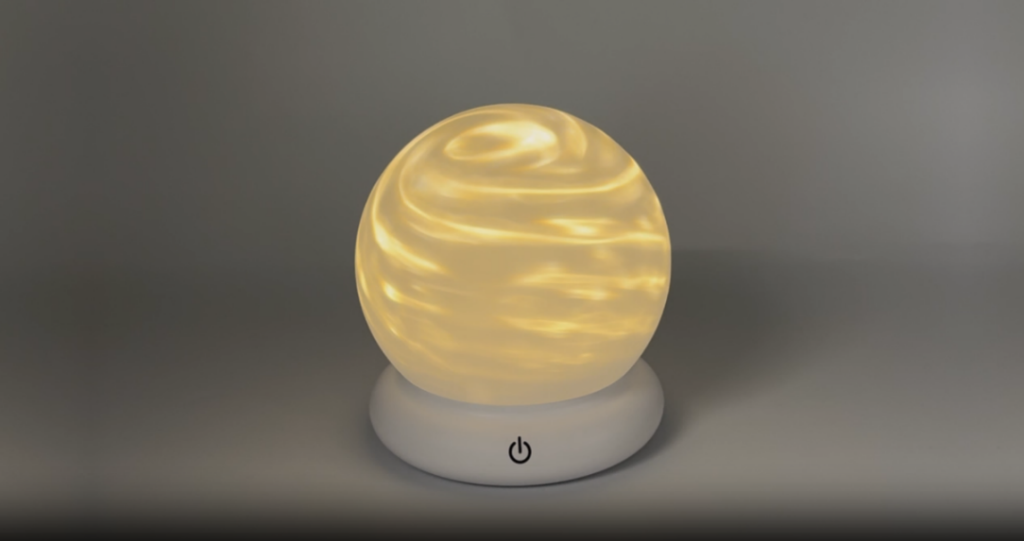
Another interesting example includes EU Design 015146726-0003, which is a recorded video of a table lamp that exhibits a swirling pattern of lights that is more clearly illustrated through the animated representation format.
Meanwhile EU Design 015154204-0001 shows a building facade having an array of plates that oscillate backwards and forwards in subtle manner that would be difficult to identify in static images.

Dynamic representation use
The designs using dynamic representations in the form of STL and OBJ files show a much more even spread across industries. Of the 33 identified designs, a substantial proportion fall into different Locarno classes. The largest concentration is in class 06-01 (seats), although this came from only two filings totalling nine designs, while other designs filed include products such as jewellery, scent diffuser bottles, furniture, exercise equipment, packaging, sanitary apparatus and newsstands.
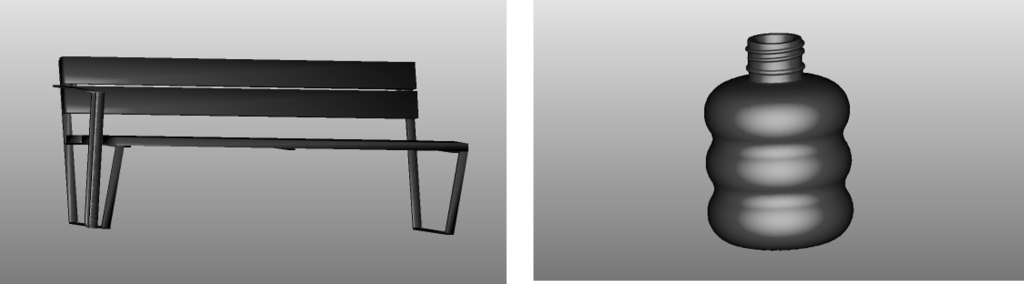
A limitation of dynamic representations is that they are directed to three-dimensional shape only; colour and surface texture cannot be shown in the same way as in a conventional rendered image. This helps to explain the early concentration in furniture and functional products, where the applicant’s principal interest may be the product’s form and proportions. Even so, applicants have also used the format for products such as finger rings, where colour and surface finish may often be commercially important.
Conclusion
The early filing data shows limited uptake of video and dynamic 3D representations, with static views continuing to account for over 99% of designs published since the new representation types were introduced. The small number of filings should not, however, be mistaken for a lack of value. The video examples in particular demonstrate how the new system can capture movement, transformation and lighting effects in a way that static images cannot readily match. Dynamic 3D files likewise offer a potentially useful option where the shape of a physical product is the central feature to be protected and the overall shape may be difficult to illustrate from a limited number of static angles.
For applicants, the important question is not whether the new formats are more modern, but whether they communicate the design clearly and align with the intended scope of protection and wider international filing programme. As EUIPO practice develops, these early registrations provide a useful indication of where the new formats may offer a genuine strategic advantage.
If you would like to discuss EU designs or have questions about design protection more generally, please contact your usual GJE attorney, or email gje@gje.com.
Source acknowledgement: Information and images in this article are based in part on data and materials made available by the European Union Intellectual Property Office (EUIPO) through their eSearch plus database. Adaptations and analysis have been made by the author. The EUIPO and the proprietors of the registered designs are not affiliated with this publication.
Related resources
EU designs: Phase 2 reforms launched for the digital age
From today (1 July) the second phase of reform of EU designs comes into effect.
EU design reform – Phase 2 details confirmed
In this article, we look at Phase 2 of the reform changes and what they mean for design...
EUIPO rolls out phase 1 of changes to the European design system
From 1 May 2025, the European Union Intellectual Property Office (EUIPO) is implementing the first phase of its...